We wire scales into production — so a weight doesn't just show on a display. It stops a filler, counts a part, prints a label, and lands in your ERP. Equipment, controls programming, and the software that ties it together, from one team in Bethel, Connecticut since 1976.
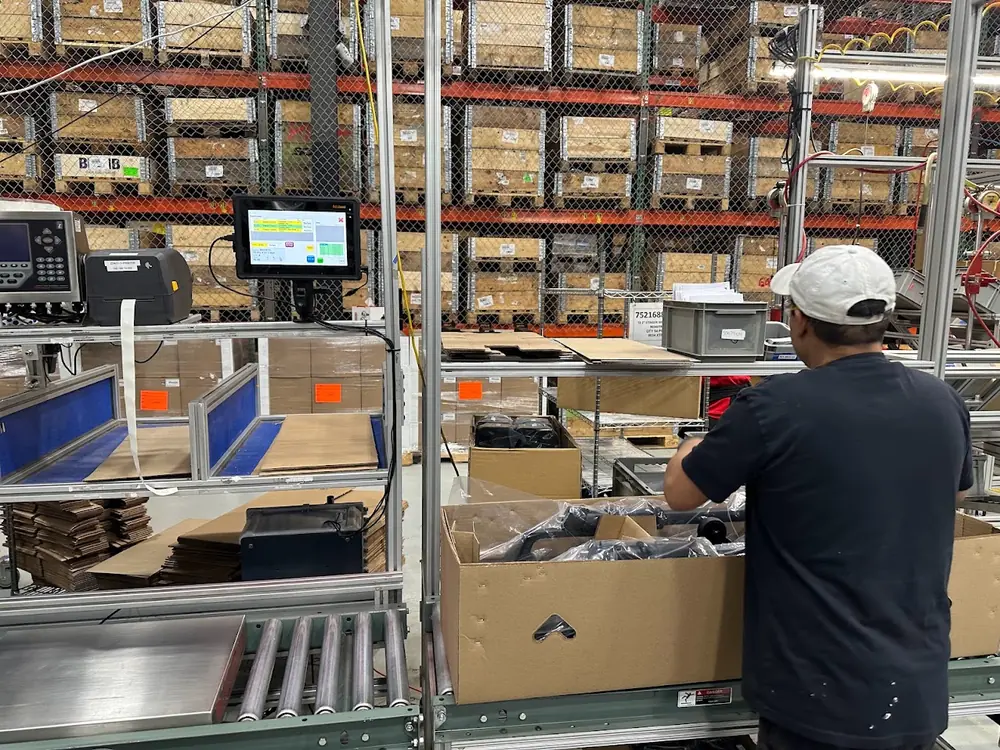
Each of these is a scale wired into a process — with the controls, networking, and software that make the weight do work.
Weight as a control signal. Scales integrated with PLCs, photo eyes, and relays, so a reading triggers, verifies, rejects, or advances a process instead of waiting on an operator.
Automation integration →Parts counting by weight. Networked counting scales that resolve piece counts from a sample weight, print the label, and sync the count to inventory or your ERP.
Counting systems →Fill to target, not past it. Automated box, bag, and container filling with adaptive fill-rate learning, so overfill stops costing you money every hour.
Filling systems →Bench, floor, monorail, and in-motion. Rice Lake indicators and platforms specified for washdown and high-throughput environments, and networked so any scale reports anywhere.
Scales & equipment →Print what the weight says. Zebra label printing driven directly by the scale transaction: catch weight, customer-specific formats, GS1 barcodes, master labels for skids.
Labeling systems →Every transaction to a database — SQL, AS400, QuickBooks, your MES — with reporting on top. Monitor a scale across the plant, or across the globe.
Data & ERP sync →Most integrations fail in the gap between vendors — the scale company blames the software, the software company blames the scale. We sell the scale, write the software, and calibrate the result, so the gap doesn't exist.
Rice Lake indicators and platforms, Zebra printers, washdown enclosures, carts — chosen for the floor they'll live on.
What the weight triggers, what it prints, where it's stored — PLC logic, label formats, database and ERP integration.
Factory-trained technicians on-site, calibration records kept, and 24/7 technician consultation after go-live.
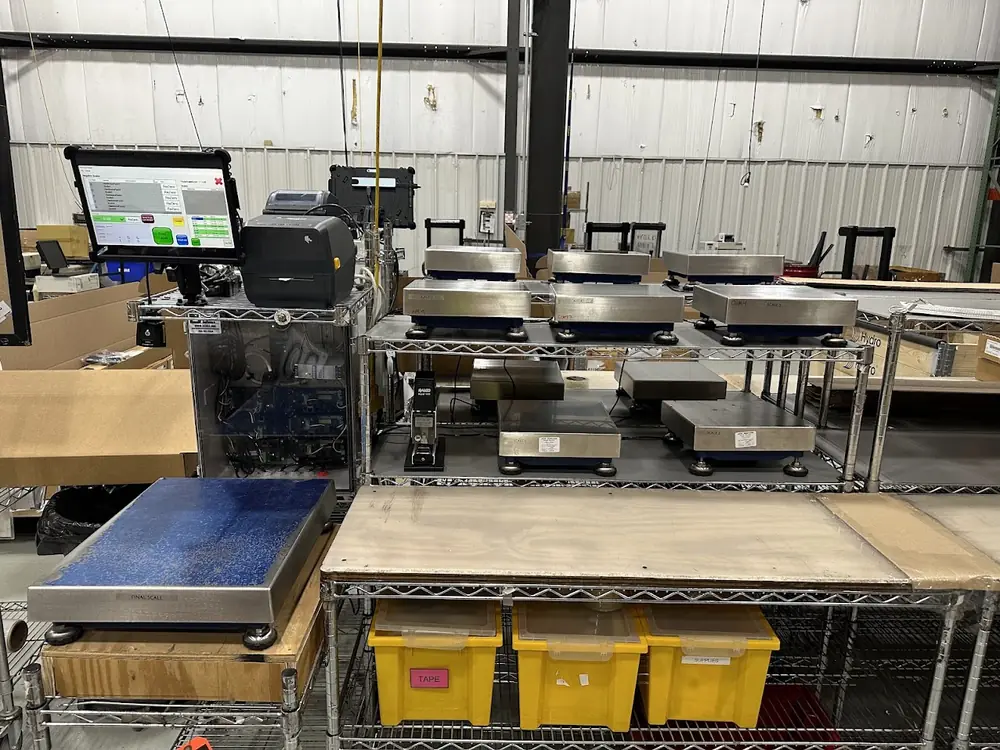
Projects from the controls-and-programming side of the house, as they happened.
A scale dealer brought us a filling line the manufacturer never got right — each box filling nearly ½ lb over target, roughly $300 an hour in giveaway. We wrote a program that learns the product's fill rate and sequenced box placement, fill, and removal automatically.
Two Symbol scanners, a photo eye, and a logic controller validating two barcodes against each other and rejecting any mismatch — with master labels for skids produced from the scan stream.
The world's largest switch manufacturer needed a networked counting scale that prints barcode labels, replacing costly Intermec fixed-station terminals.
A processor paying workers by weight needed every weight captured with the employee ID behind it. Three networked scales into SQL, with integrated Crystal Reports.
Where a weight has to trigger, count, or verify something.
Where the weight is the product and the label has to be right.
On-site calibration across Connecticut and the Northeast, with calibration records kept for your files.
Factory-trained technicians, on-site or depot, on the equipment we sell and most of what we don't.
Sales and service for Rice Lake indicators and platforms, including the 1280.
Round-the-clock expert support — because a stopped line doesn't wait for business hours.
Bring the problem — the overfill, the miscount, the label that has to match the ERP — and you'll talk to the person who'll program it.
 Progressive Scale