Automation, counting, filling, weighing, labeling, and data collection — the six things we wire a scale into so the weight does work instead of sitting on a display.
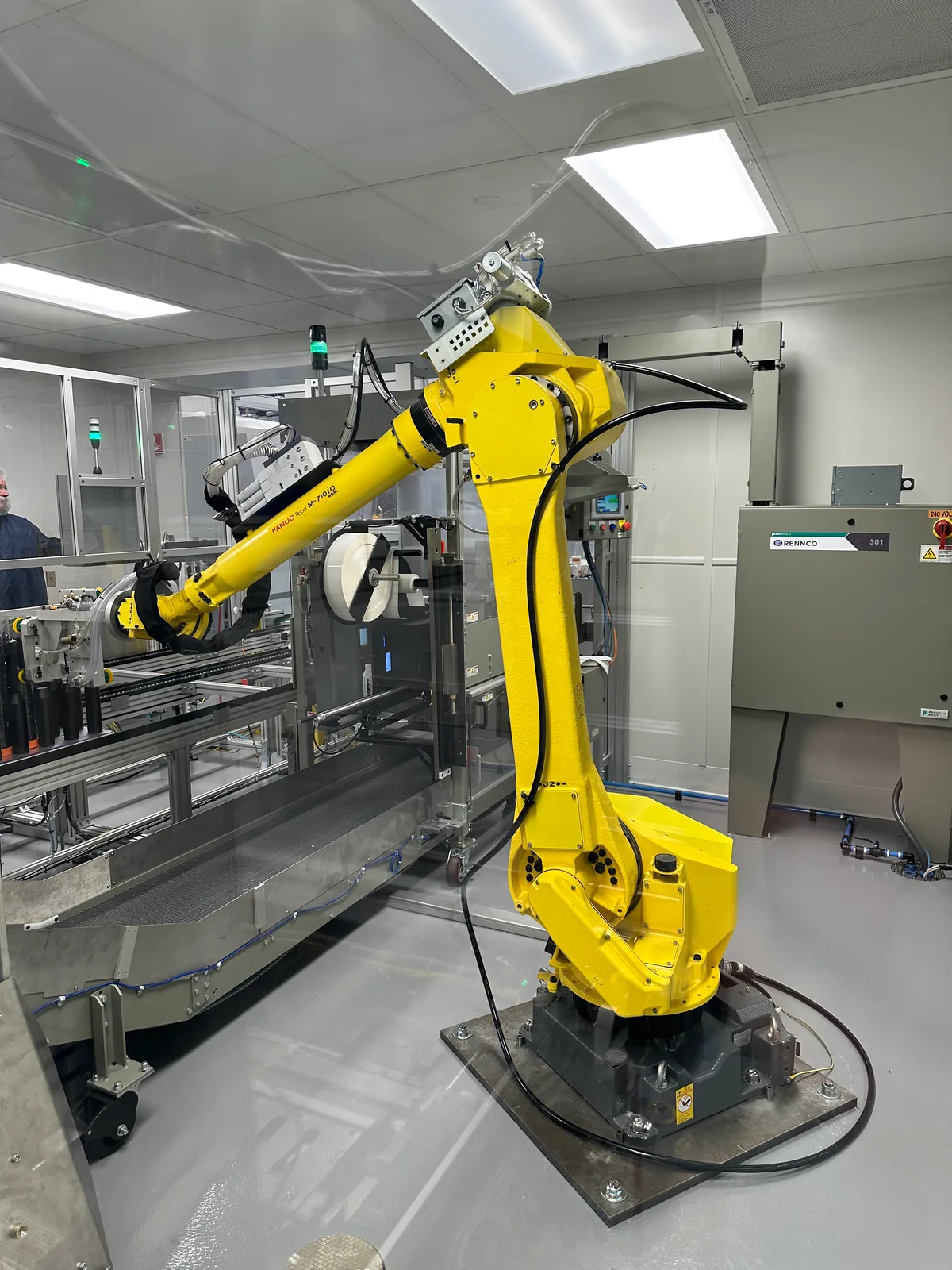
A scale reading becomes an input your process acts on. We integrate indicators with PLCs, photo eyes, relays, and logic controllers so a weight starts a feed, stops a filler, verifies a pack, rejects a reject, or advances the line — without an operator reading a display and deciding.
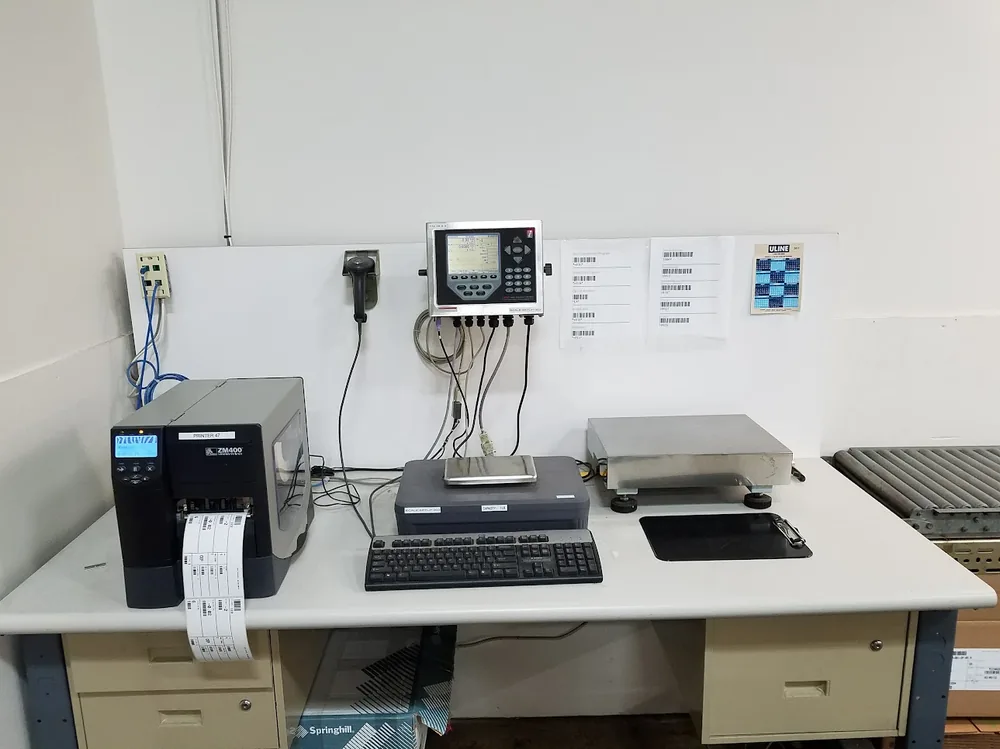
A counting scale system resolves a piece count from a sample weight, prints the label that has to go on the bin, and puts the count where inventory can see it. Networked, so the count at the bench is the count in the system.
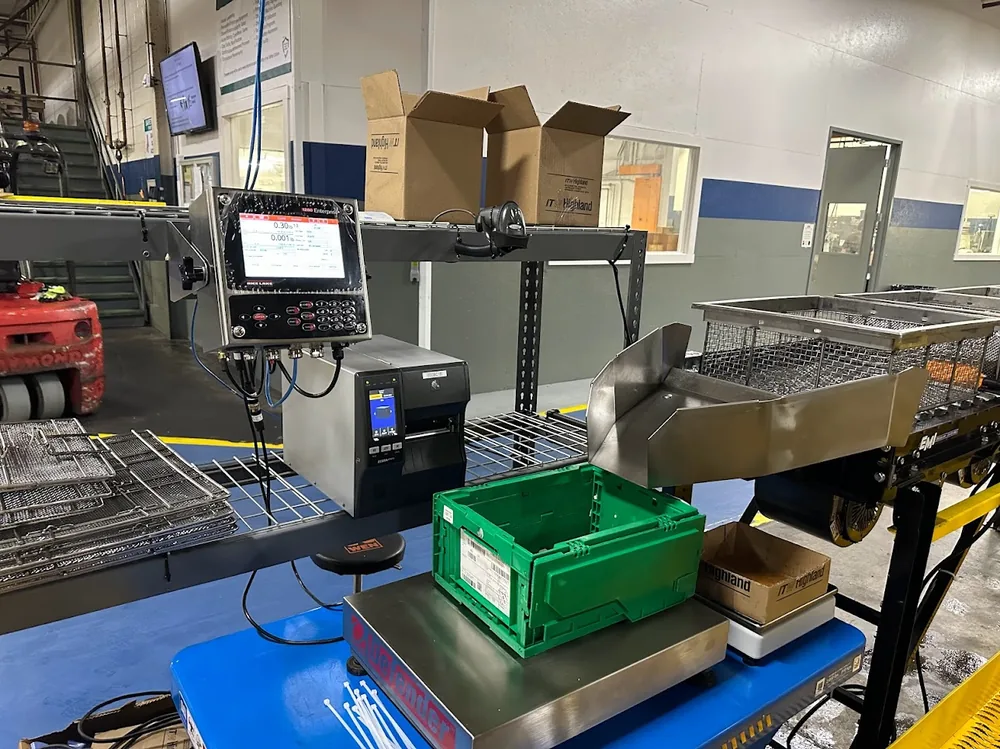
Overfill is money leaving the building every hour the line runs. We build automated filling systems for boxes, bags, drums, and containers that learn the product's fill rate and adapt to it, with automated placement and removal where the process allows.
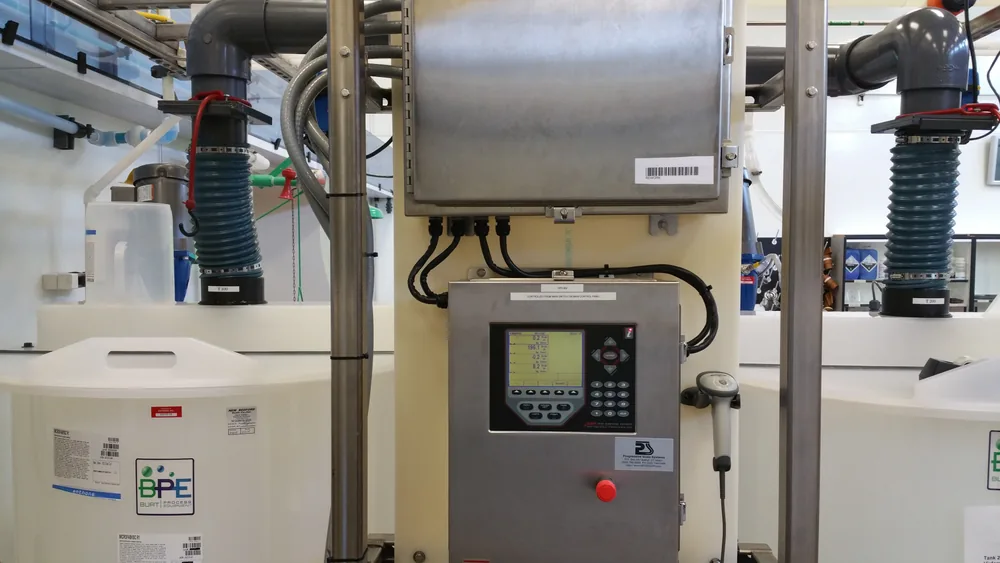
The platform and indicator have to suit the floor they live on — washdown, freezer, dusty, high-throughput, or all four. We specify, install, network, and then calibrate them, so every scale in the plant reports to the same place.
The label is where the weighment becomes a document — and where a mismatch becomes a chargeback. We drive Zebra printers directly from the scale transaction, in the format the customer requires, including master labels that summarise a whole skid.
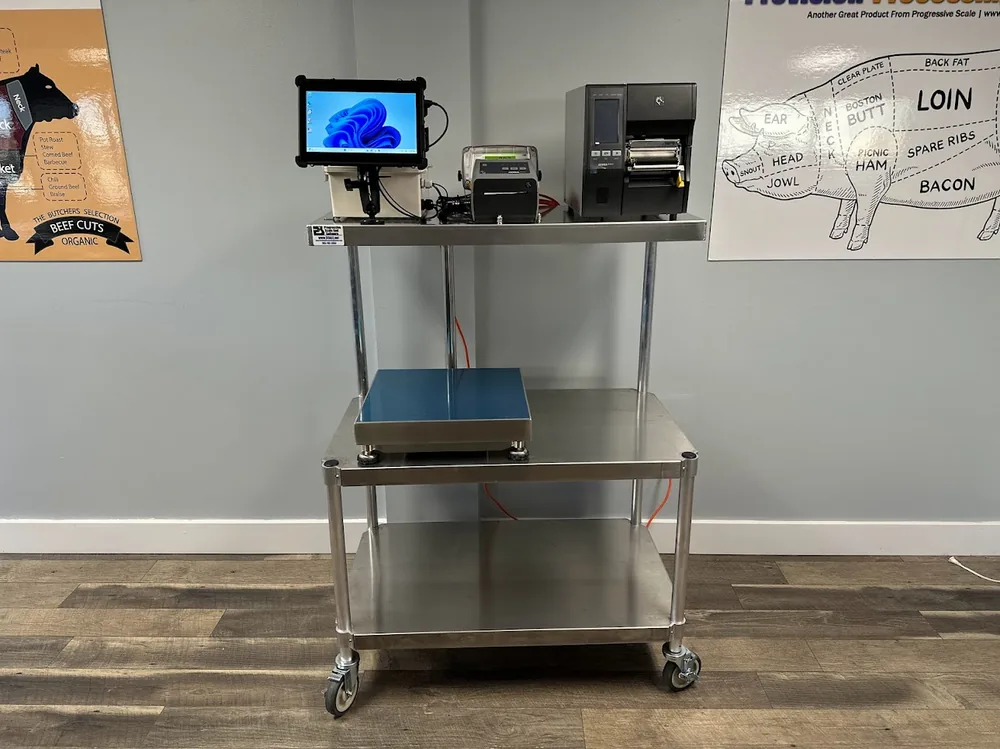
A weight that is not recorded is a weight you cannot prove. Every transaction lands in a database — SQL Server, AS400, QuickBooks, your MES — with reporting on top, and scales that can be monitored remotely whether they are across the plant or across the world.
Carried over from our own project notes. No names have been added that were not already ours to name.
A local scale dealer called in Progressive to pick up a project that the scale manufacturer had not completed to the client's satisfaction. Each box was filling to nearly ½ lb over target — a loss of nearly $300 an hour. After consulting with the customer, Progressive devised a new program that would auto-learn the product fill rate.
To make sure every suture was barcoded properly, United States Surgical Corporation called in Progressive. At one fifth the cost of the nearest competitor, Progressive built an automated barcode scanning system. Using two Symbol barcode scanners, one photo eye, and a logic controller, the system validates two barcodes against each other and rejects any invalid scans. As a result of scanning, master labels are produced for skids.
The world's largest switch manufacturer contacted Progressive to see if we could develop a networked counting scale that prints barcode labels, to replace their pricey Intermec fixed station terminals.
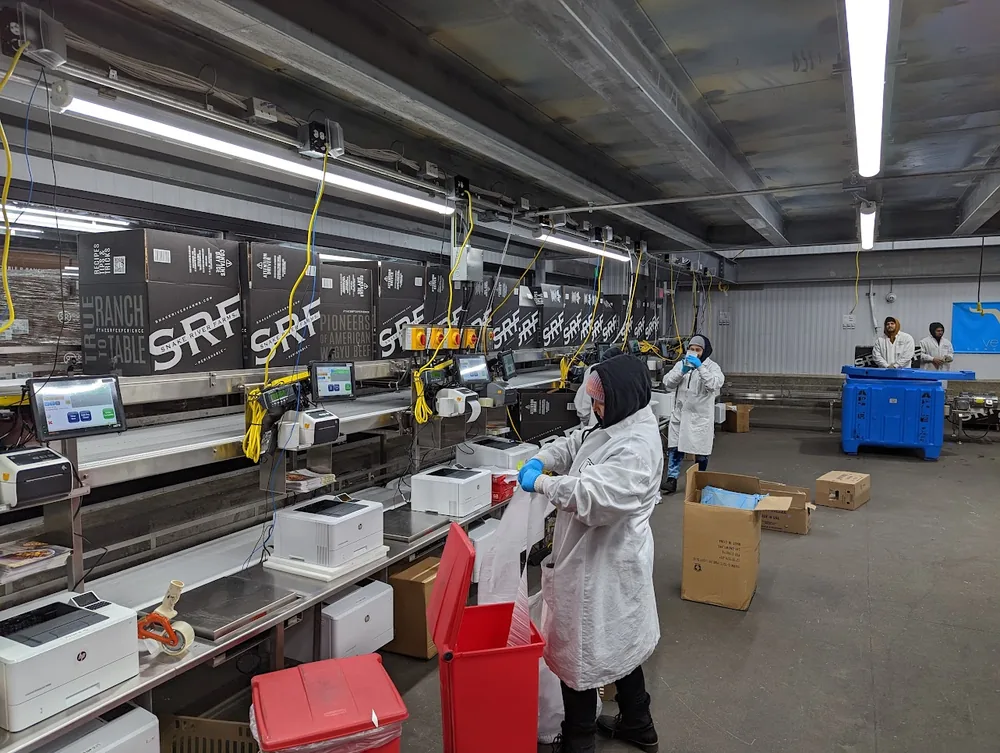
This processor pays workers by weight, so the fish system needed to collect each weight as well as employee IDs. The system involved three networked scales and an SQL database.
A weight-tracking system with a web interface for menus and reporting across multiple locations.
Counting scales integrated to an AS400 host, delivered through a Northeast scale distributor.
The integration does not get handed between a scale vendor and a software vendor, because it never leaves the building.
Rice Lake, A&D, Digi, Ohaus, and Totalcomp hardware specified for the environment it has to survive.
Scales & equipment →Controls programming, label formats, database and ERP integration — and PPS for processing plants.
PPS Software ↗Calibration, repair, and 24/7 technician consultation on what we installed — and on what you already own.
Service & calibration → Progressive Scale